

What Future Awaits EBAA After the Cancellation of EBACE

After the European Business Aviation Association announced the cancellation of the EBACE 2026 exhibition, even the laziest observers said—either publicly or to themselves—“We warned you!”, addressing the organizers. At the same time, the frustration over losing the exhibition as a nostalgic symbol of business aviation mixed equally with anger that market participants had not been heard and were forced to protest with their wallets.
But now, when the reasons for this fiasco have been sufficiently identified and discussed in numerous posts by business aviation professionals, the question has shifted. It is no longer “what will happen to EBACE,” as few people care anymore. The business aviation community has already voted in favor of AERO Friedrichshafen as the new driver of professional communication. The real question now is what will happen to EBAA as an association.
For a long time, participation in EBACE was considered “a must” for business aviation market players. This factor was both EBAA’s main advantage and guarantee of prosperity, and at the same time a trap for participants. It created a perception that if a company chose not to participate in the exhibition, others might interpret it as a loss of position.
It took several years of disappointment and tens (sometimes hundreds) of thousands of euros wasted without any tangible return in the form of new clients for this stereotype to be broken. Pragmatism prevailed, a new “event agency” offered a more democratic format, and exhibitors moved elsewhere. EBAA lost not only exhibition revenue—it lost the main motivator for companies to remain members of the Association.
I was surprised at how common the answer was to the question: “Why are you still paying EBAA membership fees?” The answer: “Because otherwise we won’t be able to participate in EBACE as exhibitors,” which was, of course, a misconception—but an extremely widespread one.
However, there was another factor behind participation in EBAA that market players rarely articulated openly: status. The “EBAA Member” label was perceived by many as something that automatically elevated their company into the top tier of the aviation business. Ideally, companies would accumulate several such labels—after all, there are many associations—and the perceived status would grow accordingly. It looked respectable. Didn’t it?
Yet, in practice, these labels had no influence on company behavior in stressful situations. Membership in associations did not become a moral imperative that would prevent companies from engaging in dishonest profit-seeking or even fraudulent actions against other members of the business aviation community—often fellow EBAA members. Why did this happen?
Because business ethics were never a core value for EBAA’s management. There was conditional status, a certain aura of elitism, and a focus on lobbying industry interests before regulators—but never a focus on values. For years, this approach may have seemed beneficial to EBAA, as it allowed the Association to accept anyone willing to pay membership fees, while concerns about business integrity were dismissed under the principle of “non-interference in members’ commercial activities.”
It is also important to note that, according to its charter, the European Business Aviation Association is a “non-profit organization”. Anyone who has ever been involved in organizing participation in EBACE will understand why I put that term in quotation marks. In many ways, the Association’s entire activity over the years has existed like this: “in quotation marks.”
Now that EBACE has effectively died a natural death, the absence of values that truly matter to the business aviation community has played a cruel joke on EBAA’s stakeholders. Lobbying industry interests is, of course, important. But every EBAA member understands that if regulators change rules in favor of business aviation, those changes will apply to everyone—not just EBAA members.
So why should only a select few pay for it, if everyone benefits? What is the point of paying for membership? Simply to maintain an administrative structure that, in reality, existed largely to justify participation in EBACE?
To make matters worse, in October–November 2024, Association members began receiving letters from EBAA informing them of a sharp increase in annual membership fees. The fees were to be differentiated based on company size. As a result, for many large companies, membership fees increased up to tenfold. At the same time, members were given no satisfactory explanation for the increase. Despite protests and some adjustments during private negotiations, annual fees still rose at least two to three times.
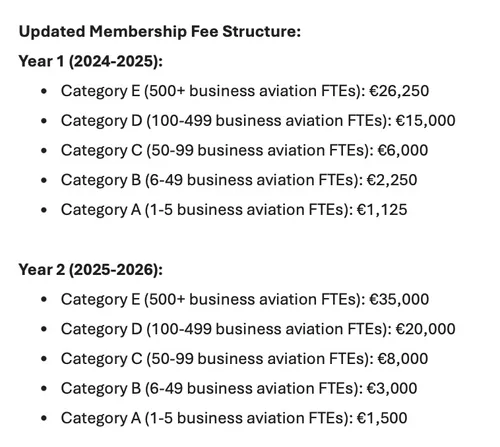
This only intensified dissatisfaction and led members to ask the fundamental question: “What are we paying for?” The notion of an illusory “status” began to fade under the pressure of economic challenges in the industry and a broader global reassessment of values.
Now, with no real motivators left for membership, EBAA stakeholders face a critical question of relevance and survival. Who will continue to pay? In my view, EBAA management has two main options.
Option 1: Conservative
In its recent press release about the cancellation of EBACE, EBAA stated that this would allow it to focus on its core mission—lobbying industry interests before governments and regulators. However, as noted earlier, this alone is unlikely to motivate the average business aviation company (especially service providers and brokers) to finance such efforts.
In this case, EBAA could identify key industry players who stand to benefit most from regulatory changes (for example, the removal of environmental taxes) and ask them to fund the Association. But this would immediately raise the issue of KPIs. Any investor funding such efforts would want to evaluate effectiveness.
And this is where things could become even more problematic than the cancellation of EBACE. Sponsors might end up paying merely for EBAA representatives to attend hearings, take photos with Members of the European Parliament, and issue polished press releases. Such a model is unlikely to last more than one or two years—but it could buy time.
Option 2: Reformist
Alternatively, EBAA could revive itself by proving its value to all business aviation market participants. How? Figuratively speaking, like the character played by Morgan Freeman in the movie “Bruce Almighty” advised the character of Jim Carrey: pick up a broom and start cleaning step by step.
Step 1
Many companies—operators and service providers alike—face difficulties with regulators, airport authorities, customs, and inspections. These actions are not always legally justified.
EBAA has an Aviation Lawyers Committee. These lawyers could become a form of legal “first aid” for members facing disputes. They could objectively assess cases and provide not only advice but real legal support.
If EBAA lawyers successfully overturned an unlawful fine or improper VAT or MOT charge on fuel for a member company, word would spread quickly. Members would then see that their fees provide real value—not just symbolic status.
Step 2
Revive the AIROPS exhibition in Brussels. Even critics of EBAA consistently praised this event. Its format avoided expensive, flashy stands and focused on practical, efficient networking.
AIROPS was not about appearances—it was about operations. It attracted professionals who actually organize flights and need practical solutions. It was a showcase of the real substance of business aviation.
Despite its effectiveness and growing popularity, EBAA chose to eliminate AIROPS first, framing it as a “merger” with EBACE in 2025. Apparently, a format that did not require large exhibitor spending did not suit the leadership of this “non-profit organization.”
Reviving AIROPS in its original format could significantly restore EBAA’s relevance. Without a broad base of engaged companies, even EBACE would resemble a half-dead body with no circulation.
Conclusion
Two years ago, I wrote an article titled “EBACE Is Dying, It’s a Fact”. At the time, it was one of many voices warning that EBACE was heading toward collapse. EBAA leadership had ample time to listen to those who were paying them. They did not. Those who paid voted with their wallets.
EBACE is gone. Its revival would require enormous resources that EBAA no longer has.
Whether EBAA shares EBACE’s fate depends entirely on its leadership. The business aviation community—including the administration of BLACKLIST.AERO—is ready to support positive change.
Artem Degtiarov, Chief editor at BLACKLIST.AERO
 Two years prior to its bankruptcy, SIA SmartLynx Airlines (Latvia) issued an unsecured loan to the Lithuanian company UAB Portlite. This information follows from a letter sent to creditors by the official insolvency administrator of SIA SmartLynx Airlines, Marija Mišina. The editorial team of BLACKLIST.AERO has obtained a copy of this letter.
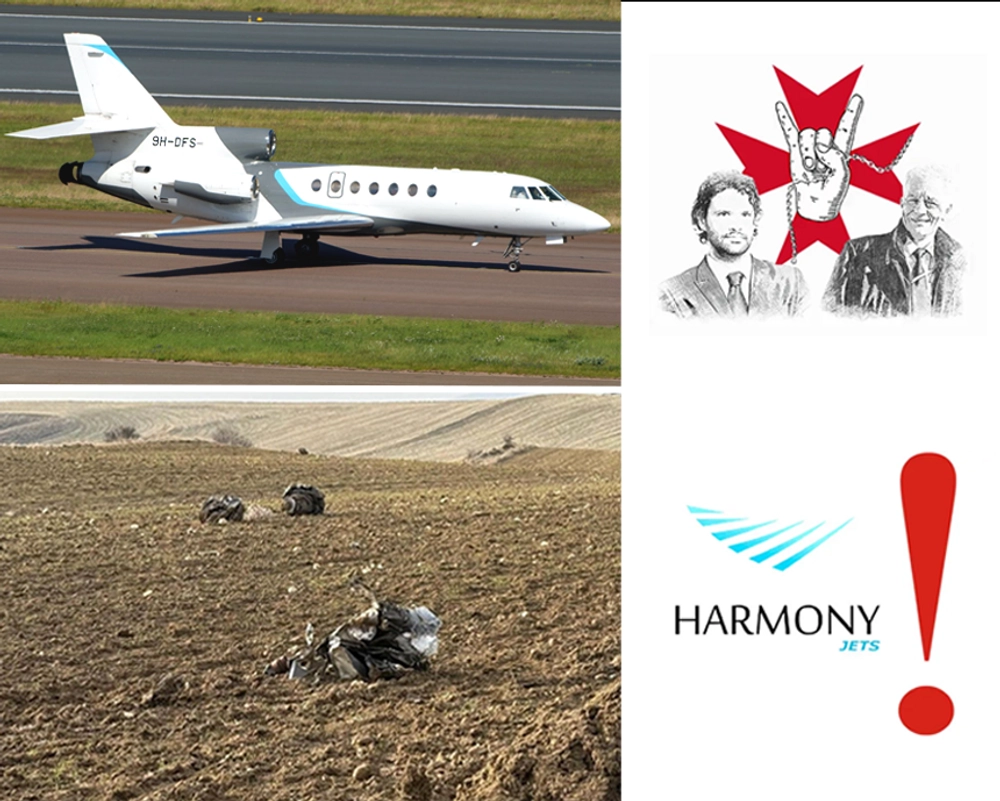 According to information obtained by the editorial team of the BLACKLIST.AERO registry, Harmony Jets and Harmony Aircraft Services have completely ceased operations.
 BLACKLIST.AERO would like to inform industry participants about outstanding operational debts associated with aircraft T7-PSJ (Gulfstream IV-SP, MSN 1251).
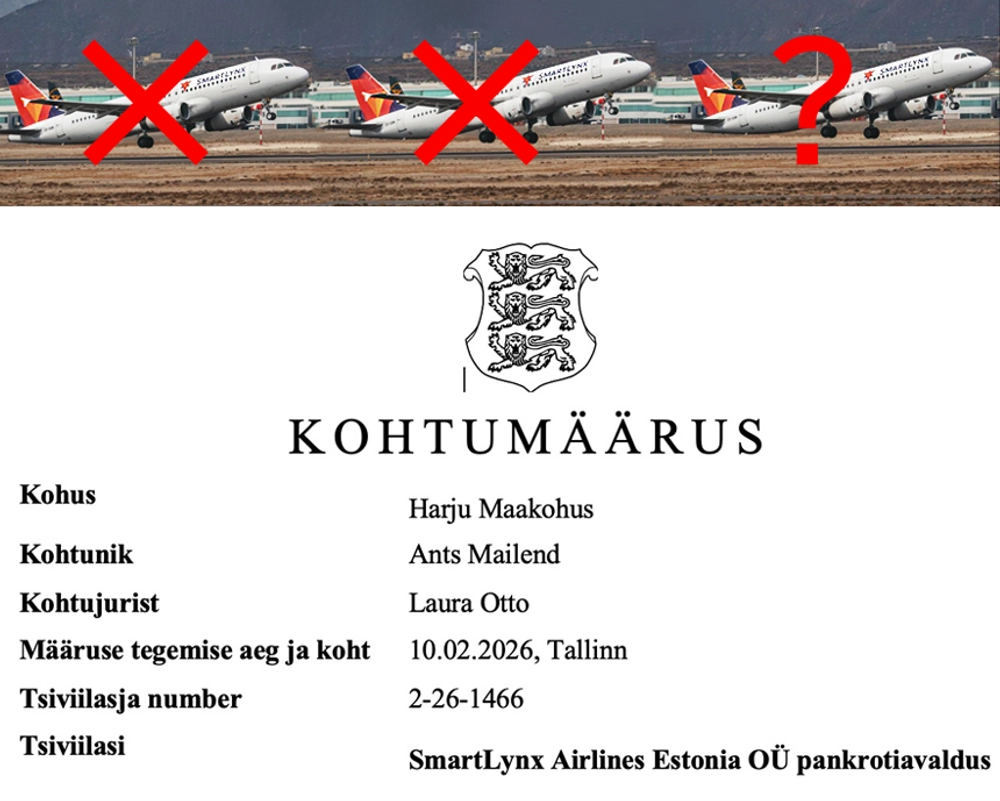 A new bankruptcy has emerged involving an airline previously belonging to Avia Solutions Group. Following the collapse of SmartLynx Airlines Latvia, bankruptcy proceedings have now been initiated for SmartLynx Airlines Estonia OÜ. A copy of the decision by the Tallinn district court Harju Maakohus to open bankruptcy proceedings was obtained by the administration of BLACKLIST.AERO from a source within the legal community.
